

- test: test
The widely reported sale by international service provider Telefonica of its Argentinian division to Telecom Argentina for US$1.245 billion, a deal agreed in February, is now on hold, apparently by order of Argentina’s government.


The widely reported sale by international service provider Telefonica of its Argentinian division to Telecom Argentina for US$1.245 billion, a deal agreed in February, is now on hold, apparently by order of Argentina’s government.
India’s Department of Telecommunications (DoT) has reportedly dropped a plan to waive adjusted gross revenue (AGR) dues of telcos, which is especially bad news for financially struggling telco Vodafone Idea.

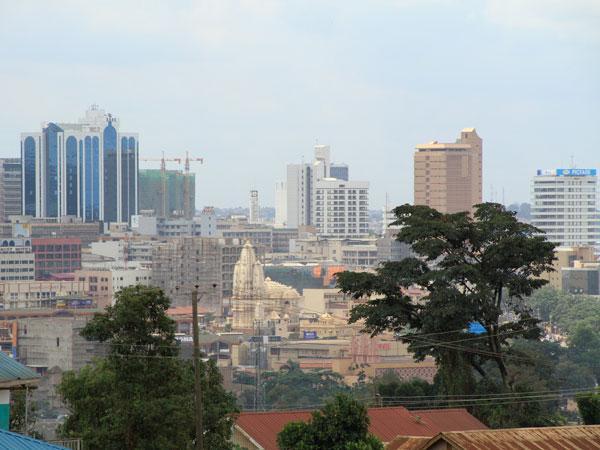
Ugandan MPs have adopted a proposal for a single SIM card policy, which aims to simplify communication across the country’s networks. It also means, in theory, that mobile phone customers will not need to carry multiple SIM cards or handsets.
The Bangladesh government is reportedly planning a major overhaul to the country’s telecoms policy to speed up its transition to a digital economy and improve service quality.

The Africa Group of Six (G6) – a coalition of African mobile network operators – says that while they have made considerable progress in their collective goal to expand mobile coverage in sub-Saharan Africa, 60% of people who live in covered areas can't afford handsets to use mobile services.

China’s Ministry of Industry and Information Technology (MIIT) has reportedly given approval to 13 foreign companies to enter the telecoms sector to offer value added services in Beijing, Shanghai, Hainan and Shenzhen.

There’s been a major boost for broadband expansion in Nigeria with news that eleven states have agreed to waive right of way (RoW) fees.


Delegates at the International Submarine Cable Resilience Summit in Abuja, Nigeria on Thursday outlined steps for stakeholders to cooperate in tackling the issue of subsea cable resilience in the wake of network outages that have plagued countries around the world.

The Bangladesh Telecommunication Regulatory Commission (BTRC) has reportedly limited bandwidth imports from India to 50% of Bangladesh’s total international capacity, and plans to lower that percentage even further in favour of subsea cables and satellite.

Ghana’s Minister of Communications, Samuel Nartey George, has revealed plans to establish an interministerial committee aimed at addressing the high cost of data in Ghana.

Thai telco True Corp says that while it welcomes plans by the National Broadcasting and Telecommunications Commission (NBTC) to hold a new spectrum auction in April, it objects to the reserve prices and the requirement that telcos must pay at least 50% of their winning bid upfront.
Thailand has said it will suspend electricity supply to some border areas with Myanmar in an effort to curb scam centres.
Nigeria’s Federal Executive Council (FEC), one of the three arms of government that conduct the affairs of the country at the federal level, has approved two major initiatives to advance Nigeria’s digital economy: the Nigeria Universal Communication Access Project and the National Artificial Intelligence (AI) Trust.

The Zambian Information and Communications Technology Authority (ZICTA) has penalised Airtel Zambia with a ZMW4 million (US$143,000) compensation bill following continuous service disruptions on its network.

The Telecom Regulatory Authority of India (TRAI) on Tuesday issued its recommendations for auctioning off millimetre wave (mmWave) spectrum for 5G services at a relatively lower price than previous auctions.

The latest African roaming agreement comes from the west of the continent, where the governments of Liberia, The Gambia and Sierra Leone have signed a memorandum of understanding (MoU) aimed at reducing telecommunications costs through improved roaming services.

The Indian government is reportedly projecting a 33% drop in telecoms revenue in its fiscal year 2026, although that’s partly due to the Department of Telecommunications (DoT) raking in more telecoms revenue than expected for FY2025.

It looks like SIM card registration in Ghana, supposedly over and done by May 2023, isn’t quite finished yet, at least according to Ghana’s Minister-Designate for Communications, Digital Technology, and Innovation, Sam Nartey George.
The Nigeria Labour Congress (NLC) – Nigeria's largest labour union – has reportedly called for a nationwide protest next week to oppose a government-approved plan by telcos to raise tariffs by 50%, as the GSMA has waded in to support the increase.
The board of Thailand’s National Broadcasting and Telecommunications Commission (NBTC) has reportedly approved draft rules that would require telcos to add biometrics to their SIM card registration processes.

Officials from China, Myanmar and Thailand have reportedly reached a consensus on eradicating telecommunication fraud centres in Myanmar, a country with a long-standing fraud problem, exacerbated by the ongoing war in that country.

Indonesia’s antitrust watchdog has ordered technology giant Google to pay IDR202.5 billion (US$12.4 million) for monopolistic practices related to payment services on its app store.

The Nigerian Communications Commission (NCC) approved tariff increases for operators in a bid to balance rising operational costs with service quality in Nigeria’s challenging economic climate.

This could be the year in which Pakistan starts to roll out 5G, according to documents cited this week in the local press relating to a 5G service launch schedule.

Mexican telecoms regulator, the Federal Telecommunications Institute (FTI), has cancelled the auction for 5G spectrum that was scheduled for this month.

